

Electric vehicles can be charged three different ways: Level 1, Level 2, and direct-current fast charging (DCFC). Each EV charging option differs in speed, cost and convenience, shaping how Coloradans plug in on the road and at home.
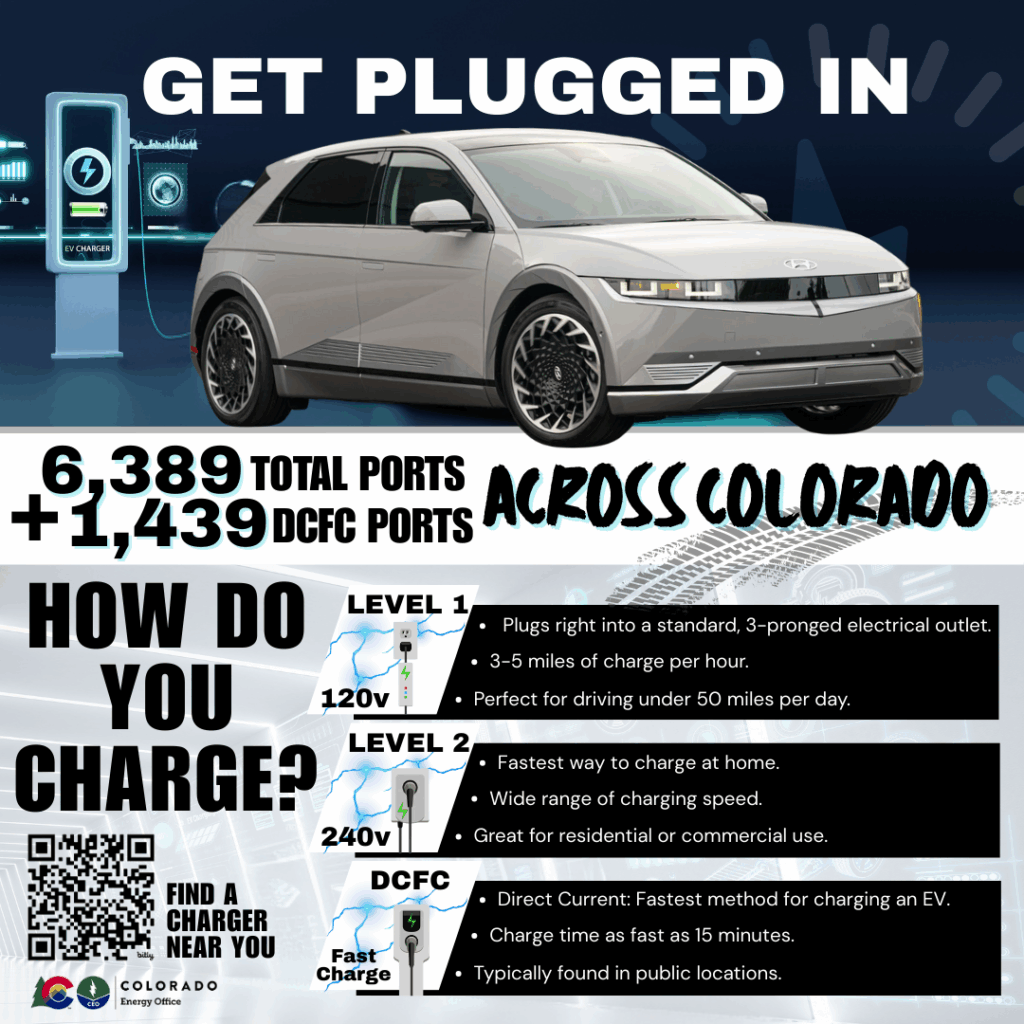
Level 1 chargers use a standard 120-volt outlet – the same as plugging in a lamp. They are the slowest option, adding 3-5 miles of range per hour. A full charge can take more than 40 hours for a battery-electric vehicle. These are best for overnight charging at home, and they are typically provided when purchasing an EV.
Level 2 chargers run on 208–240 volts and are the most common public option. They add 10 to 25 miles of range per hour, allowing most electric cars to fully recharge in 4 to 10 hours. Many workplaces, shopping centers and apartment complexes install Level 2 stations to serve daily drivers.
DC fast chargers provide the quickest boost. By delivering direct current straight to the battery, they can restore 80 percent of a vehicle’s charge in 20 minutes to an hour. These stations are critical along highways and in areas where drivers need rapid turnarounds.
Colorado’s Charging Landscape
In Colorado, the charging network includes: 6,389 public EV ports, of which 1,439 are DC fast‑charging ports.
Colorado’s infrastructure supports a growing EV population, balancing everyday accessibility with strategic fast-charging capability. Ensuring equitable access – especially to DCFC options in remote or rural areas – allows the State of Colorado to fully support the state’s expanding EV adoption.
To find a charging station near you, visit www.plugshare.com, and to learn more about EV charging, visit EVCO.colorado.gov or energyoffice.colorado.gov.
Editor’s note: Learn more about Colorado’s charging landscape at https://atlaspolicy.com/evaluateco/.